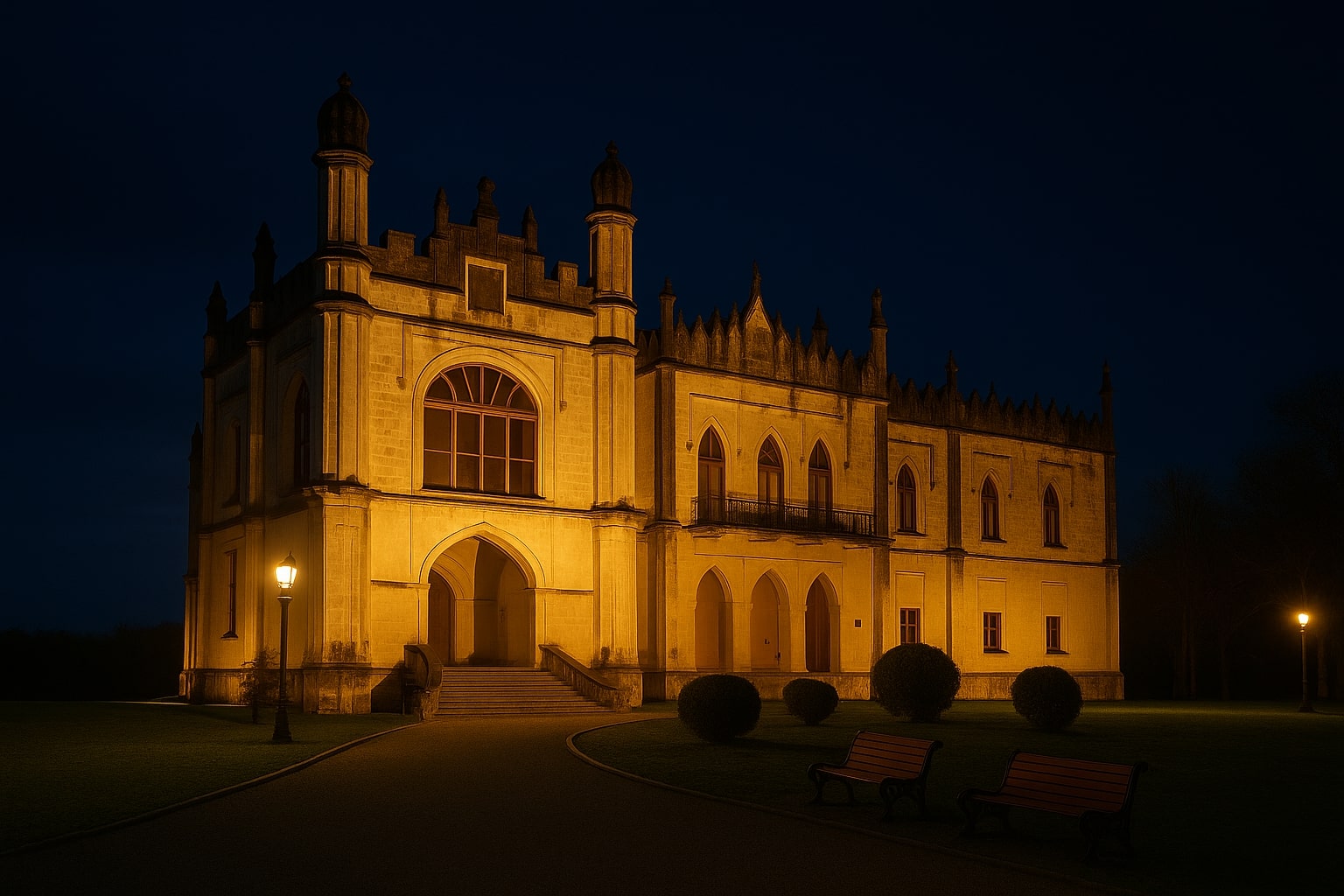

City view of Zugdidi, Georgia

Zugdidi

Zugdidi, capital of the Samegrelo region, radiates a distinctive blend of noble heritage and subtropical charm. The city’s centerpiece, the Dadiani Palace, once the seat of the ruling Dadiani princes, now operates as a museum showcasing exquisite European and Oriental art, Princess Salome’s jewelry collection, and even Napoleon’s death mask. Surrounding the palace, landscaped gardens with meandering pathways and reflective pools offer a serene retreat in the city’s heart. Zugdidi’s proximity to the Black Sea shores and the Enguri River estuary makes it an ideal springboard for exploring the nearby Kolkheti National Park—an expanse of wetlands teeming with migratory birds and ancient peat bogs. Culinary travelers delight in Megrelian specialties like ghomi (cornmeal porridge) and piping-hot khinkali filled with spiced meat, served in family-run taverns. With its genteel past, cultural riches, and access to pristine coastal ecosystems, Zugdidi encapsulates an often-overlooked facet of Georgia’s diverse landscape.

Top attractions & things to do in Zugdidi

If you’re searching for the best things to do in Zugdidi, this guide brings together the top attractions and must-see places to visit in Zugdidi. The top picks below highlight the most visited sights for first-time visitors, plus a few local favorites worth adding.

Botanical Garden of Zugdidi in Zugdidi, Georgia

Botanical Garden of Zugdidi

Established in 1840 by Prince David Dadiani, the Botanical Garden of Zugdidi spans over 25 hectares and preserves a unique collection of subtropical species acclimatized to Samegrelo’s humid climate. Originally part of the Dadiani estate, the garden’s central avenue is flanked by 200-year-old linden trees and rare magnolias imported from China. Its greenhouse complex—erected in 1893—houses exotic orchids, carnivorous pitcher plants, and a living specimen of the prehistoric Wollemi pine. Seasonal highlights include the blooming of the Rhododendron luteum in April and the autumnal crimson display of Japanese maples. In 2015, a seed-exchange program with the Royal Botanic Gardens, Kew, introduced endangered Colchic fir seedlings, now thriving in a shaded glade. Hidden pathways lead to a serene lily-pond fed by a natural spring—once used by Dadiani princes for private teas—and a secluded pavilion where local herbalists conduct workshops on traditional medicine. With minimal modern intervention, the Botanical Garden of Zugdidi offers both plant conservation and a tranquil retreat, reflecting the Dadianis’ vision of botanical exploration and cultural refinement.
Ads place
Ads place
Ads place
Ads place
Ads place
Cholopha Church in Zugdidi, Georgia

Cholopha Church

Perched on a wooded ridge 8 km east of Zugdidi, Cholopha Church—also called the Church of the Assumption—dates to the 12th century and represents a fusion of western Georgian and Byzantine architectural motifs. Its compact cross-dome design features blind arcades and carved stone rosettes, while the interior retains rare fragments of 13th-century frescoes depicting local martyrs. In 1987, restorers discovered a buried crypt beneath the altar containing votive offerings—coins, ceramics, and jewelry—dating back to the church’s consecration in 1194. An adjacent bell tower, added in 1650 by the Dadiani princes, houses a bronze bell cast in Venice and inscribed with an Italian dedication. The approach to Cholopha winds through ancient oak groves, where local legend speaks of a hidden spring that cures eye ailments. Each August, a small-scale pilgrimage brings villagers to celebrate the Feast of the Assumption, processing through the church’s narrow doorway under a canopy of votive ribbons. With its blend of art, legend, and secluded setting, Cholopha Church offers a meditative escape from the city bustle.
Ads place
Ads place
Ads place
Ads place
Ads place
Dadiani Palace in Zugdidi, Georgia

Dadiani Palace

Once the dynastic seat of the Dadiani princes, Dadiani Palace was constructed in 1848 under Princess Ekaterine Dadiani and stands as a rare example of European-style aristocratic residence in western Georgia. Its façade—adorned with ornate Corinthian columns and wrought-iron balconies—conceals a labyrinth of exhibition halls housing Napoleon’s death mask, princess Salome’s jewelry collection, and a striking assortment of European and Asian porcelain gifted to the family. The palace’s landscaped gardens, originally designed by Italian architects, feature grottos, formal terraces, and an elegant pond stocked with koi imported in 1902. In 1951, Soviet authorities converted the palace into a museum of local history, preserving original parquet floors, mirrored salons, and the family’s private library of 18th-century manuscripts. A recently discovered mural in the grand ballroom—dated 1865 and depicting a princely hunt—has been restored to reveal vibrant folk motifs. Today, guided tours include a behind-the-scenes look at the restored wine cellar, where Dadiani vintages were once aged, and conclude with tastings of locally produced Chkhaveri wine in the ornate dining hall. Dadiani Palace remains Zugdidi’s most captivating link to Samegrelo’s noble heritage.
Ads place
Ads place
Ads place
Ads place
Ads place
Enguri River Cable-Stayed Bridge in Zugdidi, Georgia

Enguri River Cable-Stayed Bridge

Opened in 1981, the Enguri River Cable-Stayed Bridge links Zugdidi with the highlands of Svaneti and was the Soviet Union’s longest of its type at the time. Spanning 870 meters with a central 400-meter span, its alabaster-white towers soar 72 meters above the riverbed. The bridge’s pioneering design features 132 steel cables arranged in a harp configuration, providing exceptional stability against mountain winds. During construction, engineers used an innovative cantilever launching method, assembling sections on either bank and sliding them into place over the rushing Enguri below. From the deck, travelers enjoy unobstructed views of the emerald river cutting through the verdant canyon, while below, recreational rafters navigate the mild rapids. A 2005 renovation reinforced the original concrete pylons and upgraded the suspension cables, ensuring continued service for freight and passenger traffic to remote valleys. The Enguri Bridge remains a living monument to late Soviet engineering ambition and a vital artery connecting Zugdidi’s lowlands to Georgia’s most dramatic highland landscapes.
Ads place
Ads place
Ads place
Ads place
Ads place
Samegrelo Ethnographic Museum in Zugdidi, Georgia

Samegrelo Ethnographic Museum

Housed in a meticulously restored 19th-century Dadiani outbuilding, the Samegrelo Ethnographic Museum opened in 1978 to showcase the region’s rich folk traditions. Its exhibits feature original Megrelian costumes embroidered with gold thread, traditional musical instruments such as the chirin and gudastviri, and centuries-old manuscripts in the Nuskhuri script. A highlight is the recreated wine-marani (cellar) room, complete with qvevri amphorae and ancient terra-cotta drinking vessels unearthed in local vineyards. The museum’s courtyard houses an open-air workshop where master blacksmiths demonstrate the forging of ancient cavalry sabers and leatherworkers craft traditional boots (cherkhet’i). In 2012, an interactive touchscreen display was added to trace Samegrelo’s maritime trade routes across the Black Sea. Seasonal cultural festivals bring the museum grounds to life with Megrelian dance troupes and cooking demonstrations of dishes like ghomi and elarji. As a center for living heritage, the Samegrelo Ethnographic Museum preserves the customs and craftsmanship that define Zugdidi’s cultural identity.
Ads place
Ads place
Ads place
Ads place
Ads place